

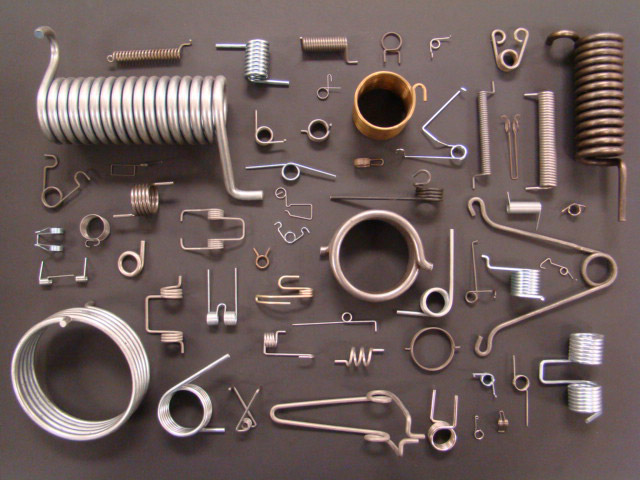
In the realm of mechanical engineering and industrial design, springs play an essential role in energy storage, force absorption, and motion control. Among the wide variety of springs available today, the extension spring, and metal spring are among the most widely used due to their functionality and adaptability. Each serves a specific purpose across countless industries—from automotive to aerospace, electronics to everyday household items. In this article, we will explore these three types of springs, how they function, and their critical roles in various applications.
Table of Contents
What is a Metal Spring?
Before delving into specific spring types, it is important to understand what a metal spring is. A metal spring is a mechanical component typically made from high-tensile materials like steel, stainless steel, or even copper alloys. Its primary function is to return to its original shape after being compressed, stretched, or twisted, making it an ideal component for absorbing shock, maintaining tension, or storing mechanical energy.
Metal springs are fundamental components in modern machines. Their durability, resilience, and versatility make them suitable for both simple and complex tasks. Whether it’s in a car’s suspension system or a retractable pen, the metal spring is indispensable in maintaining mechanical efficiency.
Torsion Spring: Function and Applications
The torsion spring is designed to work by twisting. Unlike compression or extension springs that react to linear force, torsion springs store and release angular energy. When a torsion spring is twisted, it exerts a torque in the opposite direction, returning to its original position when the force is released.
One of the most common uses of the torsion spring is in garage doors. These springs store energy when the door is closed and release it to help lift the door open. They are also used in clothes pins, mousetraps, and automotive suspensions. The unique design of a torsion spring allows it to be compact while still handling high torque loads.
In manufacturing, these springs are custom-engineered to meet the precise torque and angular deflection required by different mechanisms. They may feature straight or hinged legs and can be wound in either direction depending on the application.
Extension Spring: Elastic Force at Its Best
An extension spring is a type of metal spring that resists stretching. It works by absorbing and storing energy when pulled apart, then exerting a pulling force to return to its original shape. Extension springs are equipped with hooks, loops, or end coils that connect them to other components.
You can find extension springs in a variety of common applications, such as trampolines, screen doors, and balance scales. In the automotive industry, they are used in components like car seats and throttle return mechanisms. Their ability to deliver a controlled tension force makes them invaluable for systems requiring precise force application.
Just like the torsion spring, an extension spring can be custom-built for specific load requirements. Engineers consider factors like wire diameter, coil diameter, material, and initial tension when designing these springs for specialized applications.
The Role of Metal Springs in Modern Technology
From precision electronics to heavy-duty machinery, the metal spring has proven to be an adaptable and reliable component. In electronics, miniature metal springs are used in battery compartments, electrical contacts, and micro-switches. Their conductive properties and ability to maintain a stable force make them ideal for such sensitive applications.
In the medical industry, metal springs are used in devices like surgical instruments, inhalers, and even prosthetics. Stainless steel and biocompatible alloys ensure that the springs meet hygiene and durability standards. The elasticity of the metal spring enables consistent performance even under repeated stress.
Industrial machines use a combination of torsion springs, extension springs, and other types to maintain operational efficiency. Whether for load balancing, actuation, or motion control, these components are engineered to perform under extreme conditions.
Choosing the Right Spring for the Job
When selecting between a torsion spring, extension spring, or another type of metal spring, engineers must consider several critical factors:
-
Load requirements: Determine the amount of force the spring needs to resist or deliver.
-
Space constraints: Consider the available space in which the spring must operate.
-
Material: Depending on environmental conditions, materials like stainless steel or high-carbon steel may be selected for corrosion resistance or strength.
-
Cycle life: Evaluate how often the spring will be used and its required durability.
Each spring type offers distinct advantages. A torsion spring is perfect for rotary mechanisms, while an extension spring is ideal for tension-based applications. A general metal spring can be adapted into custom configurations to suit highly specialized tasks.
Future Innovations in Spring Technology
Advancements in metallurgy and manufacturing techniques continue to push the boundaries of what metal springs can achieve. Laser cutting, CNC coiling, and 3D printing allow for the creation of micro and nano springs that are used in cutting-edge fields like robotics, nanotechnology, and wearable devices.
Even traditional torsion springs and extension springs are being redesigned for increased efficiency and longer lifespans. Surface treatments like powder coating or electroplating improve corrosion resistance, while new alloys offer better strength-to-weight ratios.
As industries evolve, the demand for compact, reliable, and cost-effective components will ensure that metal springs, especially torsion springs and extension springs, remain crucial to innovation.
Conclusion
Springs are more than just coiled pieces of wire—they are powerful, dynamic components that keep countless machines and devices functioning. The torsion spring, extension spring, and metal spring each play a vital role in energy storage, mechanical support, and system stability. Their versatility, durability, and adaptability make them indispensable in everything from household gadgets to high-tech industries.
As technology progresses, the design and functionality of these springs will only continue to improve, solidifying their place as essential components in the mechanical world. Understanding their differences, applications, and potential helps engineers and designers choose the right spring for every task.


