

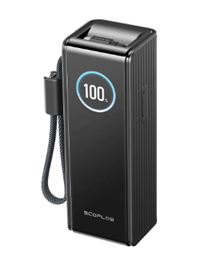
Power banks have become an indispensable part of our digital lives, fueling both work and entertainment on the go. People often ask about power banks specifically, their capacity, and course, how long they run devices. A 10,000 mAh power bank is a popular choice due to its compact size and balanced capacity. But to optimally benefit from it, one needs to understand its capabilities and limitations. This article aims to answer how long a 10,000 mAh power bank will run, examining its power capacity and various factors that influence its longevity. We’ll also offer practical tips to help you squeeze every last drop of usability from your device.
Table of Contents
Understanding 10,000 mAh Power Banks
What Does 10,000 mAh Mean?
In the world of power storage, mAh stands for milliamp-hours, a unit of electric charge. When a power bank is marked as 10,000 mAh, it implies the ability to theoretically output a total of 10,000 milliamps over one hour. Essentially, the higher the mAh, the more power the bank holds. But, it’s important to note that this capacity doesn’t always translate directly to usable energy, as real-world scenarios often involve conversion losses. Despite that, knowing the capacity offers a preliminary idea of its potential, like estimating how frequently it can charge a smartphone or any other device. Importantly, consumers should check the specifications that match their requirements, leading to informed decisions.
Efficiency and Conversion Loss
Understanding efficiency and conversion loss is crucial to estimating a power bank’s run time. Not all the stored energy reaches your device; there’s always some energy loss in the form of heat or inefficiencies with voltage conversions. This loss is often estimated to be around 10-20%. Therefore, a 10,000 mAh power bank might provide an effective capacity ranging between 8,000 to 9,000 mAh. Consequently, when charging devices, one must factor in these conversion losses. Familiarizing oneself with these aspects ensures your expectations align with reality, acknowledging the underlying components that affect true capacity.
Real‑World Usage Scenarios
Charging a Smartphone
Smartphones serve as a common benchmark when discussing power banks. On average, a modern smartphone contains a battery of approximately 3,000 to 4,500 mAh. Therefore, a 10,000 mAh power bank theoretically should charge a fully depleted smartphone battery about two to three times. However, considering conversion losses mentioned earlier, the practical number of recharges might dwindle to two full charges. Users actively engaging in high-energy activities on their devices, such as gaming or streaming, might observe even lower efficiencies. Hence, it’s plausible you’ll need to recharge this power bank frequently if a smartphone is the primary connected device.
Powering a Tablet or E‑Reader
When using a power bank to charge tablets or e-readers, the energy dynamics shift. Tablets have larger batteries, often between 5,000 mAh and 10,000 mAh. Thus, a 10,000 mAh power bank might only provide one full charge. Meanwhile, e-readers usually consume less power due to their energy-efficient screens and architecture, allowing them to be charged multiple times like smartphones. Users should weigh their device usage habits against these benchmarks, adjusting their expectations and charging patterns for optimal power bank utilization.
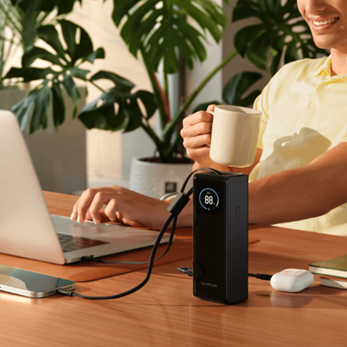
Comparing Models from EcoFlow
Key Specs from EcoFlow’s Power Banks
EcoFlow offers versatile solutions with innovative features. Their power banks include additional functionalities such as fast charging, multiple USB ports, and sometimes even solar charging options. These capabilities extend the usability of standard products, ensuring users gain value above basic power storage. Assessing EcoFlow’s product specifications offers insight into realistic expectations, enabling you to leverage these products for extended periods on the go.
Estimated Run Times Based on Capacity
By examining EcoFlow’s offerings, one can estimate realistic run times for various devices. Considering their efficiency optimizations, certain models might outperform traditional benchmarks. Consumers should evaluate specific features that match their power needs, factoring in predicted run times derived from thorough testing and product claims. These appraisals can empower buyers seeking tailored solutions that ensure robust and reliable power supply over multiple charge cycles.
Factors That Affect Runtime
Device Power Requirements
Every device has distinct power requirements, which influence how long a power bank will keep them running. Higher-powered devices drain power banks more rapidly, meaning frequent recharges are necessary. Identifying the power requirements of your devices can inform your power bank selection and usage strategy, ensuring that all your gadgets remain functional throughout the day.
Cable Quality and Output Ports
Cable quality significantly affects how efficiently power is transferred from the power bank to devices. Support for fast-charging cables and high-quality materials minimizes energy loss, ensuring more efficient power transfer. Similarly, power banks with multiple output ports offer versatility but can also divide power, affecting how long each device stays powered. Thus, investing in quality accessories and understanding power distribution among output ports can maximize efficiency.
Tips to Maximize Run Time
To extract maximum performance, ensure you use top-quality cables. Avoid exposing your power bank to extreme temperatures, as these conditions can diminish efficiency. Charging devices completely before disconnecting and reducing background app activity can extend their use. Regular maintenance and updates to your power bank software, if available, will also ensure optimal function over the long haul.
Conclusion
A 10,000 mAh power bank is a reliable companion for daily digital needs, capable of multiple smartphone or single tablet charges. However, achieving its full potential requires an understanding of its specifications, efficiency variables, and usage strategy. Knowledge about factors impacting runtime, coupled with recommendations from leading brands like EcoFlow, prepares you to select the right device and use it effectively. Though theoretical capacities suggest extensive spans, real-world usage may vary, underscoring the value of informed decision-making when selecting your next power bank.






