

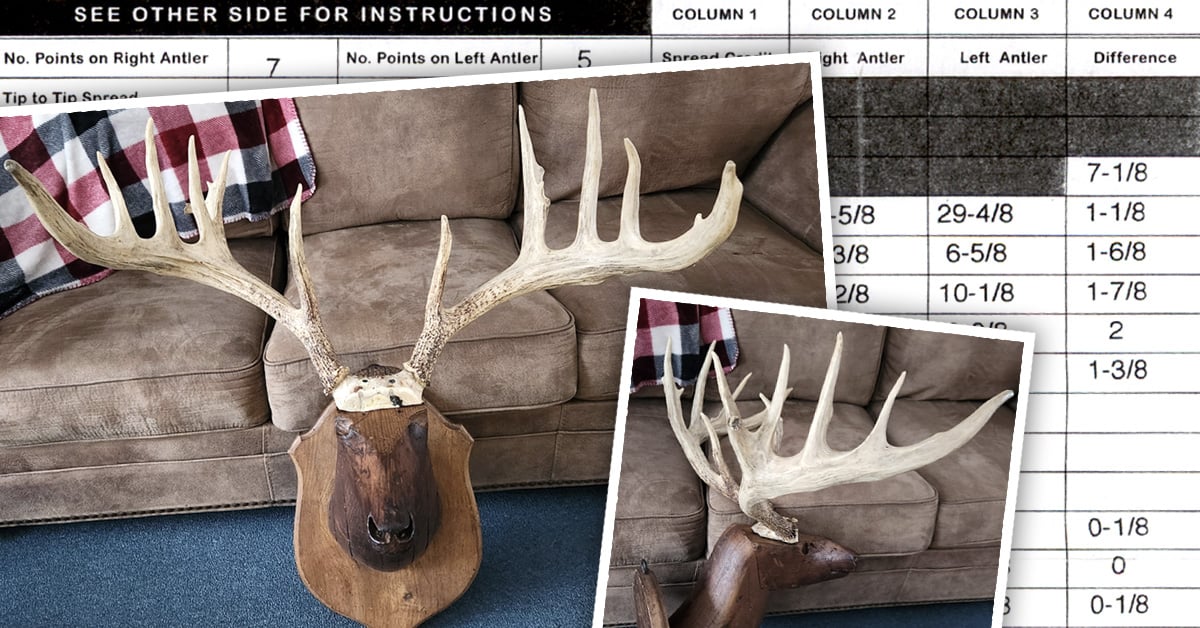
In the universe of whitetail deer hunting, a few trophies become iconic beyond their mere physical dimensions. One such is the saga of the Fred Goodwin buck, which to me seems like a towering testament not only to the sharpshooter’s skill but also to his field discipline and patience. Quietly shot in 1949 somewhere deep up in the northern woods of Maine, this animal has gone on to be known as having one of the most outstanding and beautifully balanced antlers ever to be seen. Although it wasn’t officially documented due to some tiny glitches in the paperwork, the Fred Goodwin buck still depicts the fascination with whitetail hunting and the perennial outdoor heritage of Maine.
This type of hunting story is not only about trophies but also the connection that the hunters establish with the land and the skills that the hunters have to put into the careful work of tracking, and also a little bit of suspense because of the respect they show to the animals they are after. The Fred Goodwin buck is also the same case, as it stood for dedication that lasted for many years and for the knowledge of the wilderness of the northern part of Maine.
Fred Goodwin: The Man Behind the Buck
Fred Goodwin, born in 1909 in the tiny town of Silver Ridge, Maine, developed a deep connection with nature – the forests, rivers, and animals – that were all around him from his childhood. While he was not only a hunter, he was also a guide, trapper, and antler collector; all of his life, he devoted it to understanding whitetail deer and the changes in the northern forests.
Goodwin was known for his thorough knowledge of the behavior of deer, including seasonal movements, feeding habits, and favorite resting places. Over almost 70 years, he built up a very large collection of antlers with a sum of 1,300+ sets. Each set was like a new chapter in the book, showing not only the difficulties of hunting but also the traits of the hunter.
One of the things that set Goodwin apart from a lot of other people around him was that he was quite inventive. It was still a long way off before deer lures and tree stands became a standard part of hunting, and he was already doing experiments with different ways of ensuring his safety as well as his success in the field. He was very thorough not only in hunting but also in the process when he was recording his trophies, which consequently earned him a lot of respect from the other hunters and collectors. The Fred Goodwin Buck was the highest honor of a lifetime, and he was committed to the sport.
The Hunt for the Silver Ridge Buck
The Fred Goodwin buck story continues a bit backwards, first showing us the history of the most legendary trophy of the Maine northern woods that Fred Goodwin collected with his rifle on a cold December day of 1949. Goodwin was equipped with the rifle to take on the hunt of one of the most sneaky nature whitetail deer in the northeast woods, and finally he found out a giant buck was going to move slowly and quietly through the snow-covered trees.
With patience and exactness, Goodwin took the shot. The Silver Ridge Buck, as it’s called today, rolled down, a symbol of mastery not only of skill but also of understanding nature through behavior. Its antler was extraordinary: a gigantic 36-inch spread with remarkable symmetry, if officially measured, would be estimated to score more than 225 inches. A minor skull fracture, however, caused the result to be ineligible for the Boone and Crockett record set, but still, a magnitude that couldn’t diminish its legend.
Fred Goodwin Buck is known as neither symbolic nor one of the best trophies in the world, but dedication, patience, and the knowledge that is needed to succeed in the Maine wilderness are all part of the story that the old giant deer tells.
A Collection of Legends
Fred Goodwin’s fascination with the whitetail deer was not a one-off occurrence. He accumulated thousands of antlers throughout his lifetime, each of which represented a story of waiting, skill, and tenacity. The Silver Ridge Buck was at the forefront of his exhibit, a source of admiration for both other hunters and fans of antlers.
Goodwin was not only a hunter but also a recorder of his experiences. He painstakingly took the measurements, found the locations, and listed the details of each trophy, thereby creating a record that is indicative of both the fauna and the people’s way of life in northern Maine. His precise recording has acted as a beacon for new hunters, proving that hunting is not merely the pursuit of trophies but the practice of getting to know and respecting the animals and their habitats.
The Fred Goodwin buck is an achievement that exemplifies the pinnacle of his life’s work, a witness to the practice of forest observation, selective hunting, and commitment to the Maine woods that lasted for decades.
Cultural and Historical Significance
The Fred Goodwin buck story has become a symbol of Maine culture and is a symbol of a time when hunters depended on patience, skill, and a deep respect for the land. It is a tale that has been told over and over again for decades, which has not only been an inspiration to local hunters but also to people from all over the country.
On top of that, the story of Goodwin conveys the transformation of the methods and the morality of deer hunting. His resourceful behaviors, which included the first practice of using baits for deer and the building of the tree stand, had a great effect on the following generations of hunters who learned from him. The accurate and thorough way in which he traced, kept, and exhibited his trophies showed that he realized the fact that hunting is a part of the nature cycle, and it is as much a matter of conservation and a matter of giving back to nature as it is of taking.
To a great extent, the Fred Goodwin buck is an emblem of the fusion of old hunting practices with new ones and a strong advocate of the fact that respect for nature and perfection of the technique are two qualities that have always been present in every hunter’s chase throughout history.
Lessons from a Legendary Hunt
To this day, the Fred Goodwin buck keeps people asking questions, and it is this very same curiosity that makes hunting and nature lovers learn a lot from it. Firstly, it shows how observation and patience take a major role in the game. Goodwin had to put in a lot of hours watching deer habits, noting seasonal patterns and environmental signals that were directing his hunting choices by the way.
Secondly, it points out the significance of being prepared and flexible. The Goodwins’ methods of innovating from the use of tree stands to his control of the situation by strategic positioning, show that victory is usually achieved by a creative approach and giving due respect to the minor details of nature.
To sum up, the story talks about the importance of inheritance. By sharing the story of his hunting and conserving his works, Goodwin made it possible for what he learned in the forest to become a source of motivational experience for others, even after his time. Then, the Fred Goodwin buck is still a symbol of the heritage, conveying the message of the nature-mankind relationship to the hunters who have been there before and those who are to come in the future.
Conclusion
The story of the Fred Goodwin buck is still one of the most legendary tales in the history of the hunting of whitetail deer. Although the buck’s official records may not be acknowledged, its importance among the hunting community is beyond measure. Fred Goodwin’s life was a perfect example of skill, patience, and a deep respect for nature, and the Silver Ridge Buck is now a tribute to this spirit.
The story of the Fred Goodwin buck is not only a hunting story but also a symbol of the rich outdoor heritage of Maine, an emblem of hard work, and a testament to the deep bond between the hunter and the land. To the old guard of hunters, collectors, and enthusiasts, it continues to be a beacon of the potential that can be realized by the combination of talent, knowledge, and passion in the field of the outdoor arena.
Watch It: https://youtu.be/sJJvfw5drLk


