

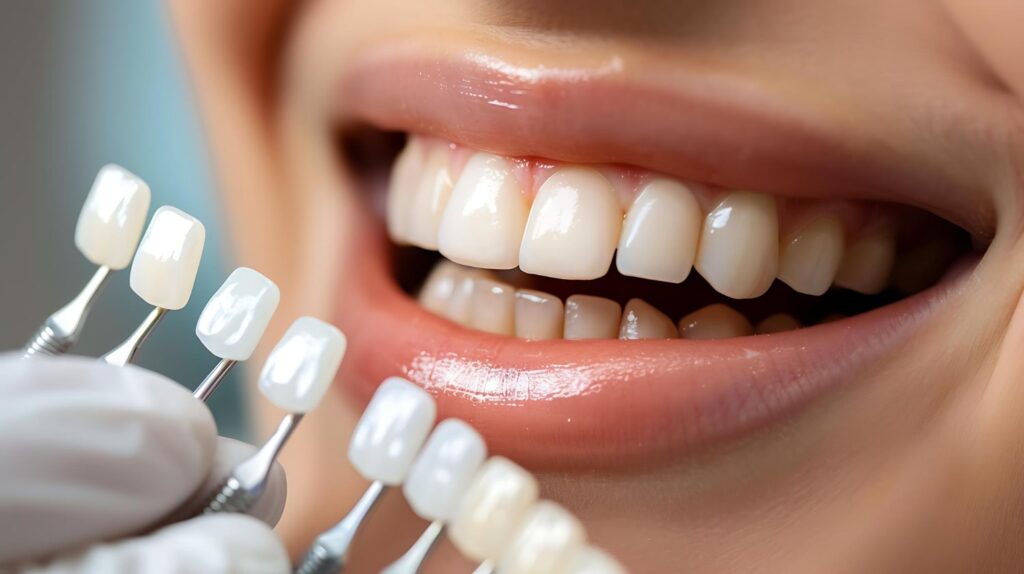
Trust is invisible, yet it governs nearly every human interaction. Within moments of meeting someone, we make unconscious decisions about whether to trust them. While we like to think these judgments are based on rational factors, a surprising amount comes down to subtle physical cues, including dental appearance. Understanding why this happens reveals fascinating insights about human psychology and social dynamics.
Table of Contents
Evolutionary Roots of Dental Assessment
Humans have been evaluating each other’s teeth for thousands of years, long before modern dentistry existed. Healthy teeth historically signaled good overall health, adequate nutrition, and youth. These factors mattered tremendously when assessing whether someone would be a reliable ally, trading partner, or community member.
Although we no longer consciously think about teeth as health indicators, the evolutionary programming remains. Our brains still process dental appearance as a quick proxy for numerous other qualities. Straight, white teeth trigger associations with health and vitality, which then extend to broader assumptions about reliability and capability.
The Symmetry Factor
Facial symmetry plays a major role in how we perceive others, and teeth are a significant component of facial balance. When teeth are aligned and proportionate, they contribute to overall facial harmony. This symmetry registers unconsciously as a positive signal.
Research in social psychology has repeatedly shown that people rated as more symmetrical are also rated as more trustworthy, even when observers can’t articulate why. Your teeth contribute to this assessment whether you realize it or not. Misaligned or disproportionate teeth can disrupt facial symmetry enough to affect these snap judgments.
The Smile as a Social Signal
Smiling is one of the most powerful social signals humans possess. It communicates friendliness, openness, and positive intent. However, the trustworthiness of a smile depends partly on the teeth behind it. When someone has dental concerns, they often smile less freely or with visible self-consciousness. This hesitation or restraint registers subconsciously with observers.
A genuine, uninhibited smile creates immediate rapport. It suggests the person has nothing to hide and feels comfortable in the interaction. When dental insecurity prevents someone from smiling naturally, it inadvertently creates social distance that others interpret as guardedness or insincerity, even though the real cause is simply dental self-consciousness.
Professional Contexts Amplify the Effect
In professional settings, trust assessments happen rapidly and carry significant consequences. Job interviews, sales meetings, and client consultations all hinge on quickly establishing credibility. Dental appearance factors into these high-stakes evaluations more than most people recognize.
Professionals who consult with a cosmetic dentist Preston providers offer often report noticeable improvements in how clients and colleagues respond to them. The change isn’t just about the physical dental improvement itself, but about the increased confidence that allows for more genuine, trusting interactions.
The Self-Fulfilling Nature of Perceived Trustworthiness
Here’s where it gets interesting: when others perceive you as trustworthy, they treat you accordingly. They share information more freely, give you more responsibility, and assume positive intent in ambiguous situations. This treatment, in turn, allows you to actually be more trustworthy because you have more opportunities to demonstrate reliability.
Conversely, when people subconsciously read you as less trustworthy due to factors like dental appearance, they may withhold trust initially. This creates fewer opportunities to prove yourself, potentially creating a cycle that’s difficult to break.
Beyond Superficiality
Acknowledging that dental appearance affects trust assessments isn’t about promoting superficial values. Rather, it’s about recognizing the reality of human psychology. We all make rapid assessments based on limited information, and physical appearance is information that’s immediately available.
Understanding this dynamic empowers you to address factors within your control. Your teeth are one element that significantly influences how strangers perceive you in those critical first moments. Recognizing this allows you to make informed decisions about whether addressing dental concerns might open doors that have been subtly closed.


